Pots for epiphytes · from $25
Roots need air.
So we opened the walls.
Lattice-walled, 3D-printed pots with drainage geometry tuned for orchid roots. Designed, grown-in and tested by collectors — then printed one at a time in the USA.
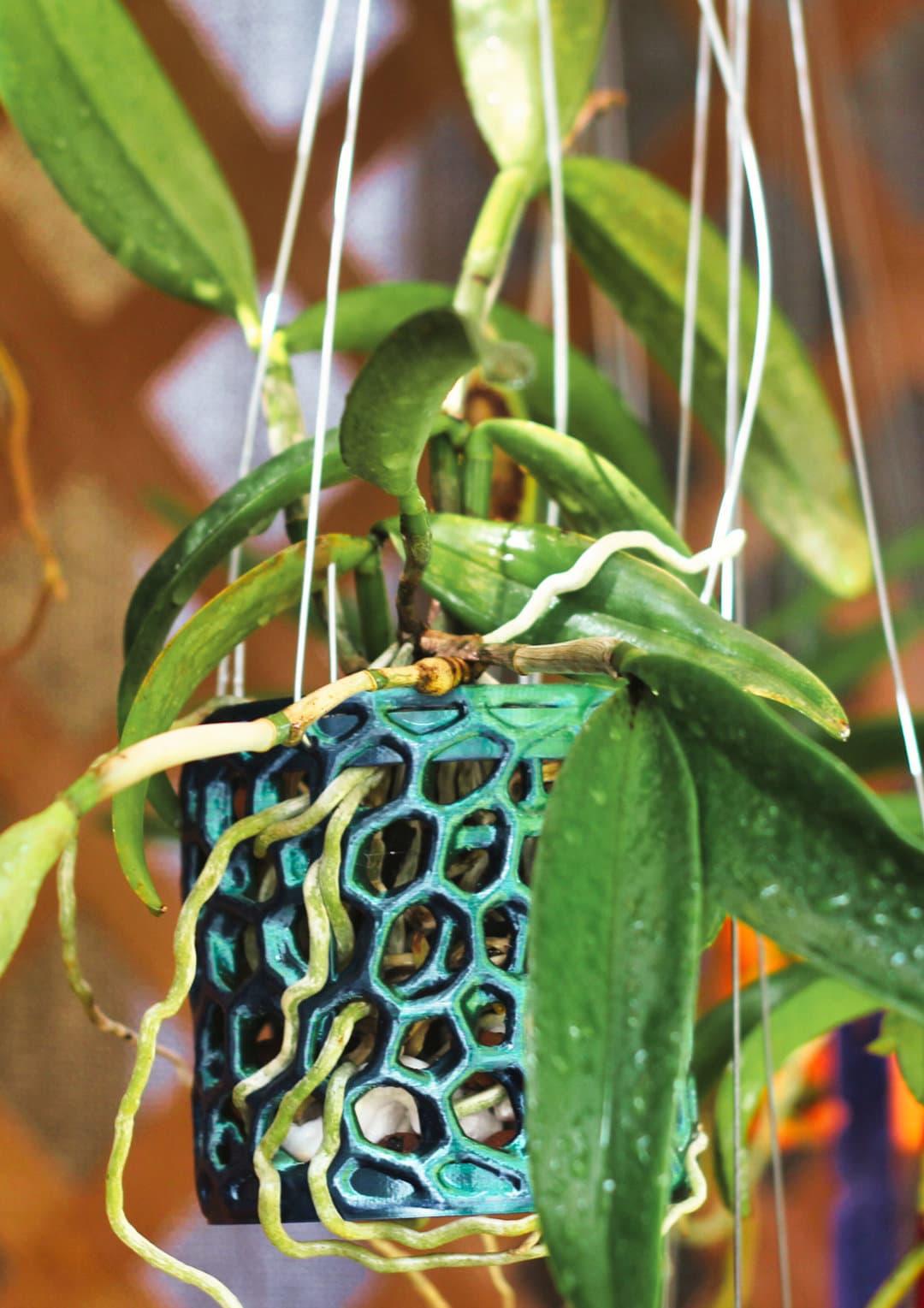
What the lattice actually does
Three things kill orchids in a standard nursery pot. Open walls fix all three.
Roots breathe on every side
Open walls let air reach the whole root mass, not just the top inch — the single biggest cause of rot removed.
No standing water, ever
Sloped interior channels dump excess water in seconds, so you can soak-water without gambling on the roots.
You can see when to water
Silver roots mean thirsty, green means fine. The lattice turns guesswork into a glance.
Best sellers
Shop all →Find your fit
Match your plant to a pot. Read our suggestions.
| You grow | Pot | Opening | Mix |
|---|---|---|---|
| Keikis, seedlings, mini phals | Small Cone | 3" | Bark + perlite |
| Vandas, Cattleyas, Phalaenopsis | Ring Pot | 4" | Bare-root or sphagnum |
| Mature phals, cattleyas | EverBloom Basket | 5" | Bark + charcoal |
“Several of my orchids have lived for years in these hanging baskets and have bloomed multiple times. One of them won’t stop blooming.”
“Repotted a rot-prone cattleya in the Rootsie. Six weeks and the new roots are green all the way down.”
Marcus D. · verified buyer“Couldn’t be happier with the quality and the aesthetic of my lovely tea cup pot! As an indoor orchid grower- I appreciate all of the air flow the pot creates. Looking forward to purchasing more in the future!”
Wildman A. · verified buyerBefore you buy
What material is used to make the pots and mounts?
We use three types of filament: PLA, PETG, and ASA. Silk PLA is our primary material for pots and mounts — it has a beautiful sheen and comes in a wide range of colors. PETG is used for moss poles and aroid pots because of its added strength and moisture resistance. ASA is reserved for our larger baskets; it comes in solid, matte colors without any shine and holds up especially well outdoors.
How are the pots and mounts made?
Every pot and mount is custom designed by us to meet the specific growing needs of orchids. We print each piece in-house on 3D printers that we maintain and operate ourselves.
Where are they manufactured?
All of our pots and mounts are designed and manufactured by Orchids 365 right here in the USA.
Can the pots and mounts be used outside?
Yes — we use all of our own products outdoors in the same space where we grow our orchids. We recommend avoiding prolonged direct sunlight. Just as orchids thrive in filtered light, so do our pots.
Are your pots safe for my orchids?
Yes. The filaments we use (PLA, PETG, and ASA) are inert once printed and do not leach chemicals that would harm your plants or roots.
How long will the pots last?
With normal use, our pots will last for many years. Outdoors, ASA is the most UV-stable option and best suited for long-term sun exposure, while PLA is best kept in shaded or filtered-light areas.
Can I clean and reuse the pots between plants?
Yes. Rinse with warm water and a mild soap, or soak in a diluted bleach or hydrogen peroxide solution to sterilize before repotting.
Will the pots warp in heat or cold?
ASA and PETG handle heat and outdoor temperature swings well. PLA can soften in extreme heat (for example, a closed car in summer), so we recommend keeping PLA pots out of very hot, direct conditions.
Can these be used for plants other than orchids?
Absolutely — our aroid pots and moss poles are designed with aroids in mind, and many customers use our pots and baskets for hoyas, ferns, and other epiphytes.
New designs, one email a month
Prototype drops, repotting notes from our own bench, and first pick on limited runs.